
Do you speak Dolphinese?
Whistle words to her and slowly learn hers.

A Wild Dolphin Your Research Station
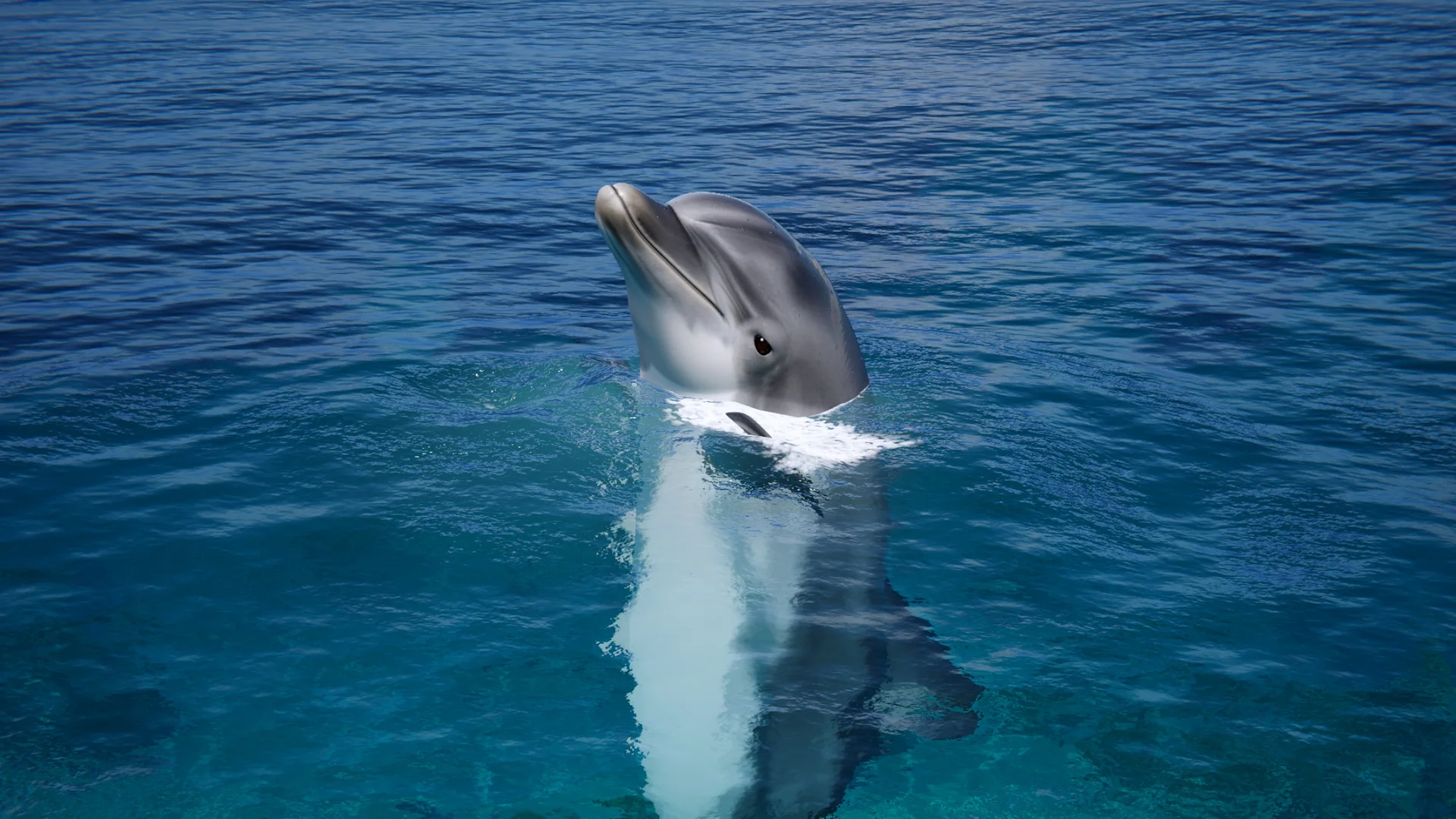
A wild young dolphin visits your research station at Shark Bay. Whistle words to her and slowly learn hers.
She comes to the station's window when she likes and leaves when she likes. Some days she stays for a long look; some days she has her own plans. You are a researcher, never an owner. Wild means free to say no.
Tap any whistle word below (or trigger a random call) to hear the actual in-game audio and send acoustic ripples across the water.
Do you speak Dolphinese? Neither do we.
Filmed directly inside OceanPal at Shark Bay. Watch the official trailer smoothly in our native 60fps player with captions, or switch directly to the YouTube player at any time.
Three short moments from the station window, with captions.
Whistle words to her and slowly learn hers.
Scientists have a few good guesses. Our best guess? Because she can.
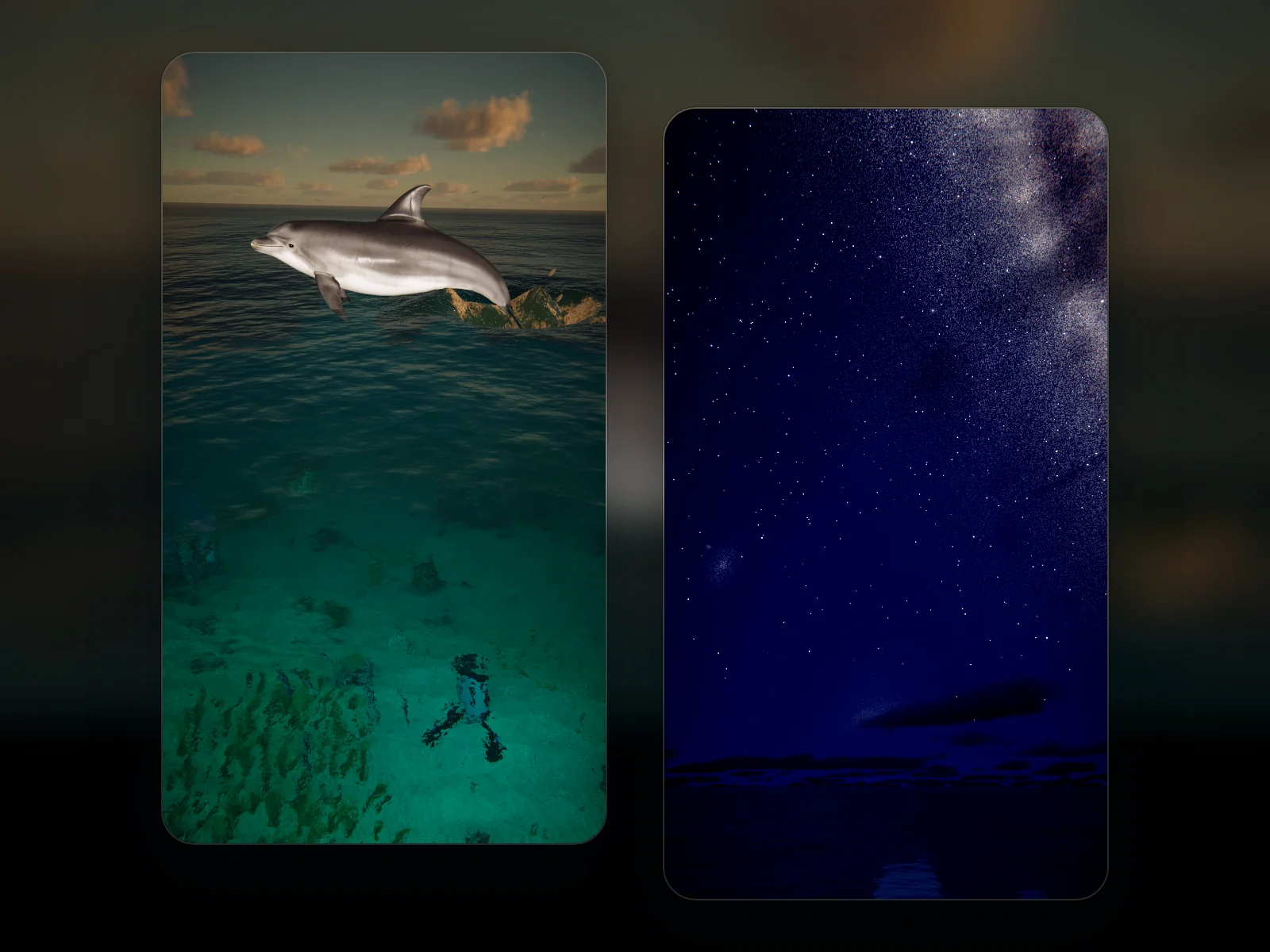
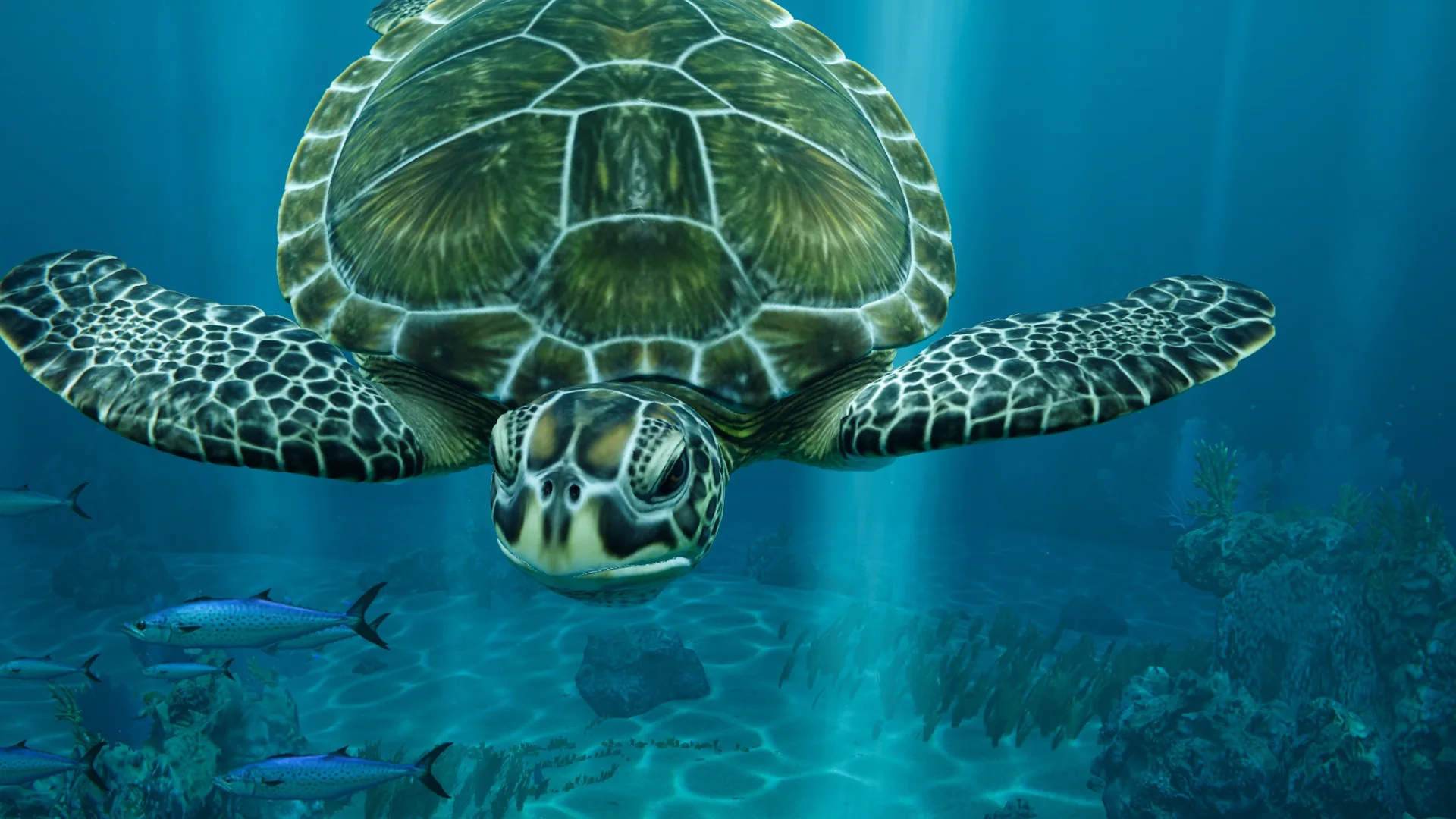
A green turtle drops by, and the night shift gets the stars.
Every image below is captured directly from the live OceanPal build at Shark Bay. No mockups, no HUD fakes.
Compose short whistles and send them out from the station. Hello is a good start.
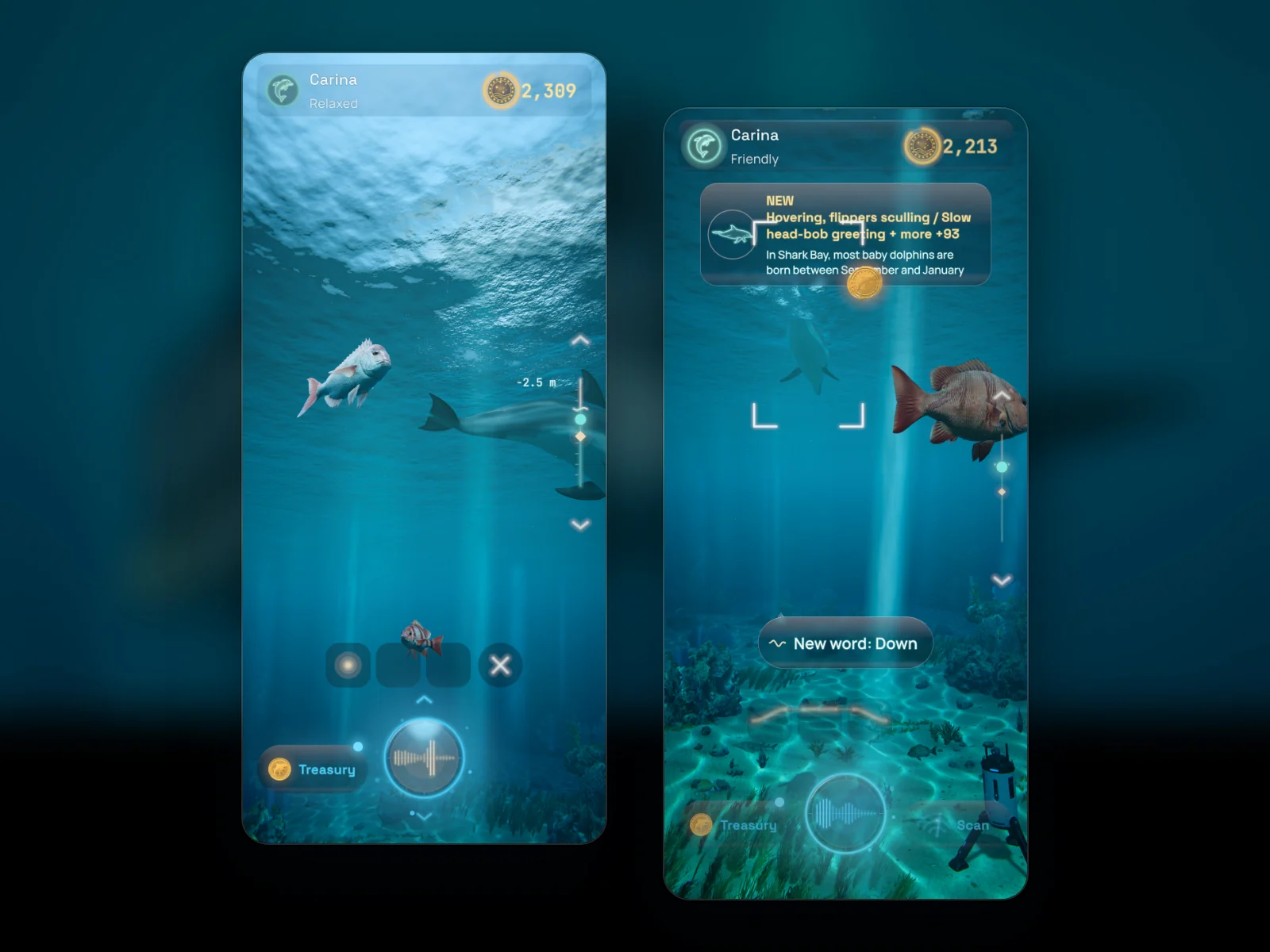
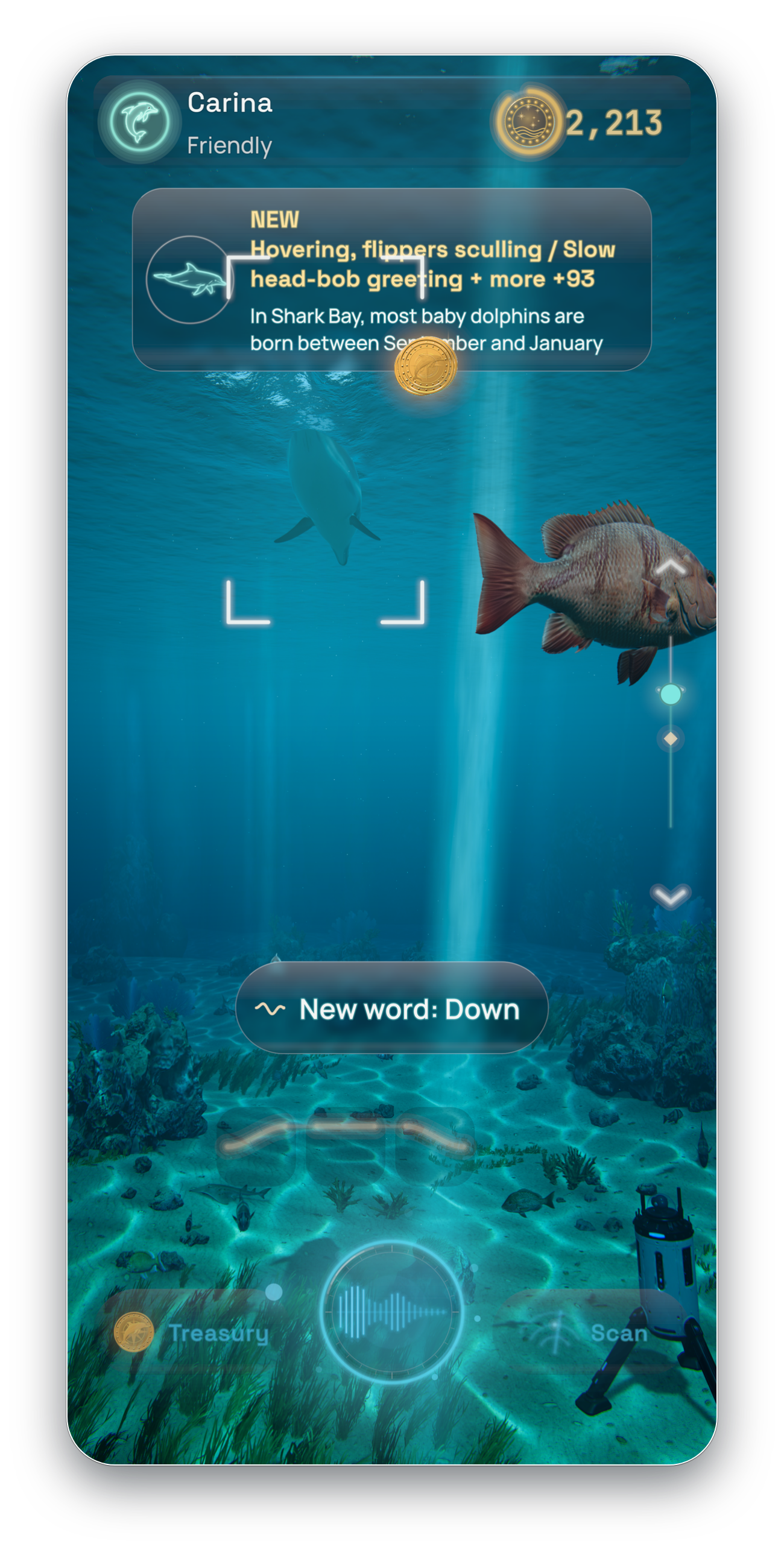
When she whistles, notice what she was doing. Over time her whistles become words. No one can fully translate dolphins yet: our translations are best guesses, inspired by research on dolphin whistles.
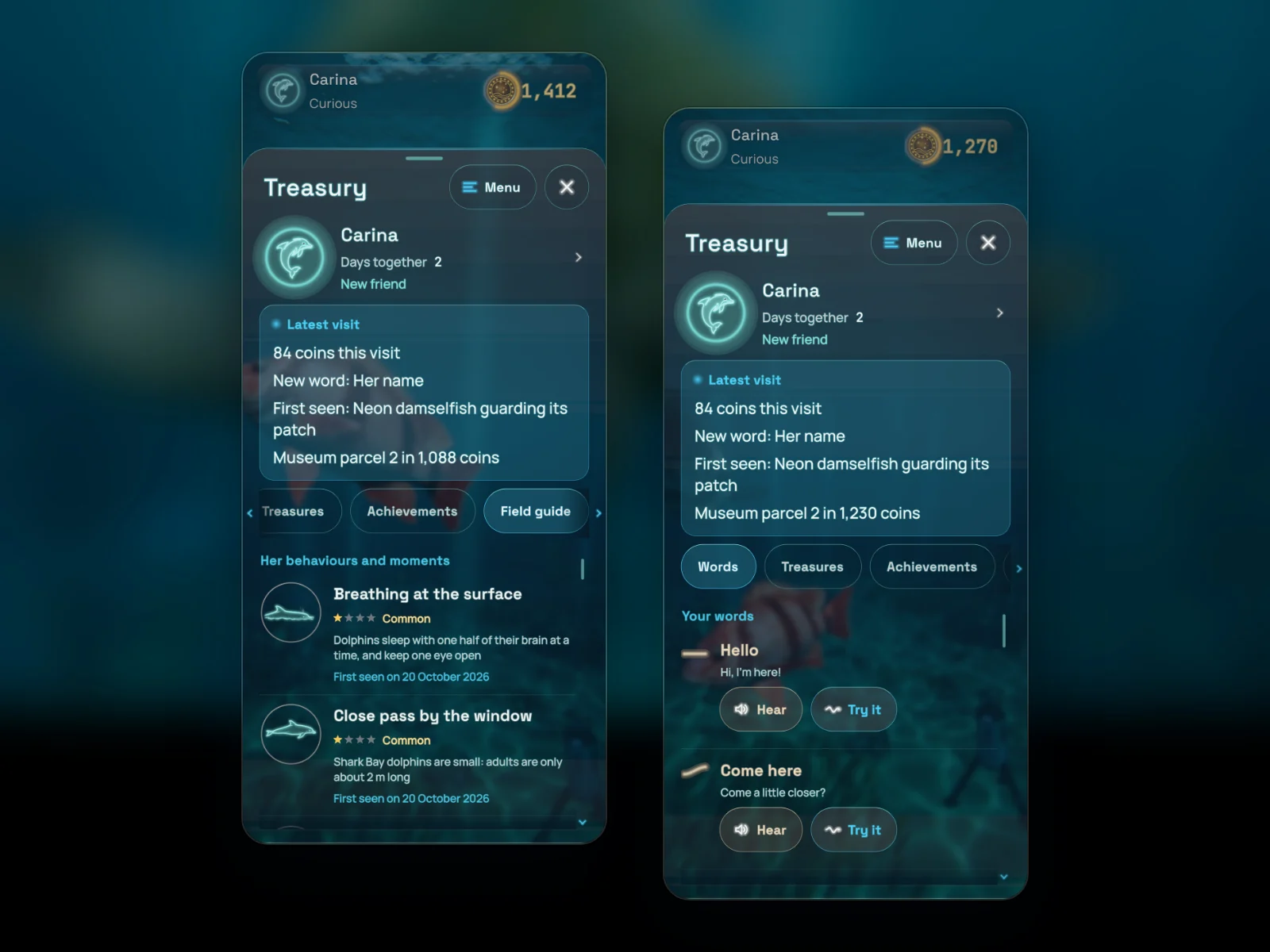
Every behaviour and moment goes into your field guide, with a fact from Shark Bay beside it.
Scan the sand for replicas inspired by real seafaring history, from a sextant like the ones that charted Shark Bay in 1858 to a Spanish piece of eight.
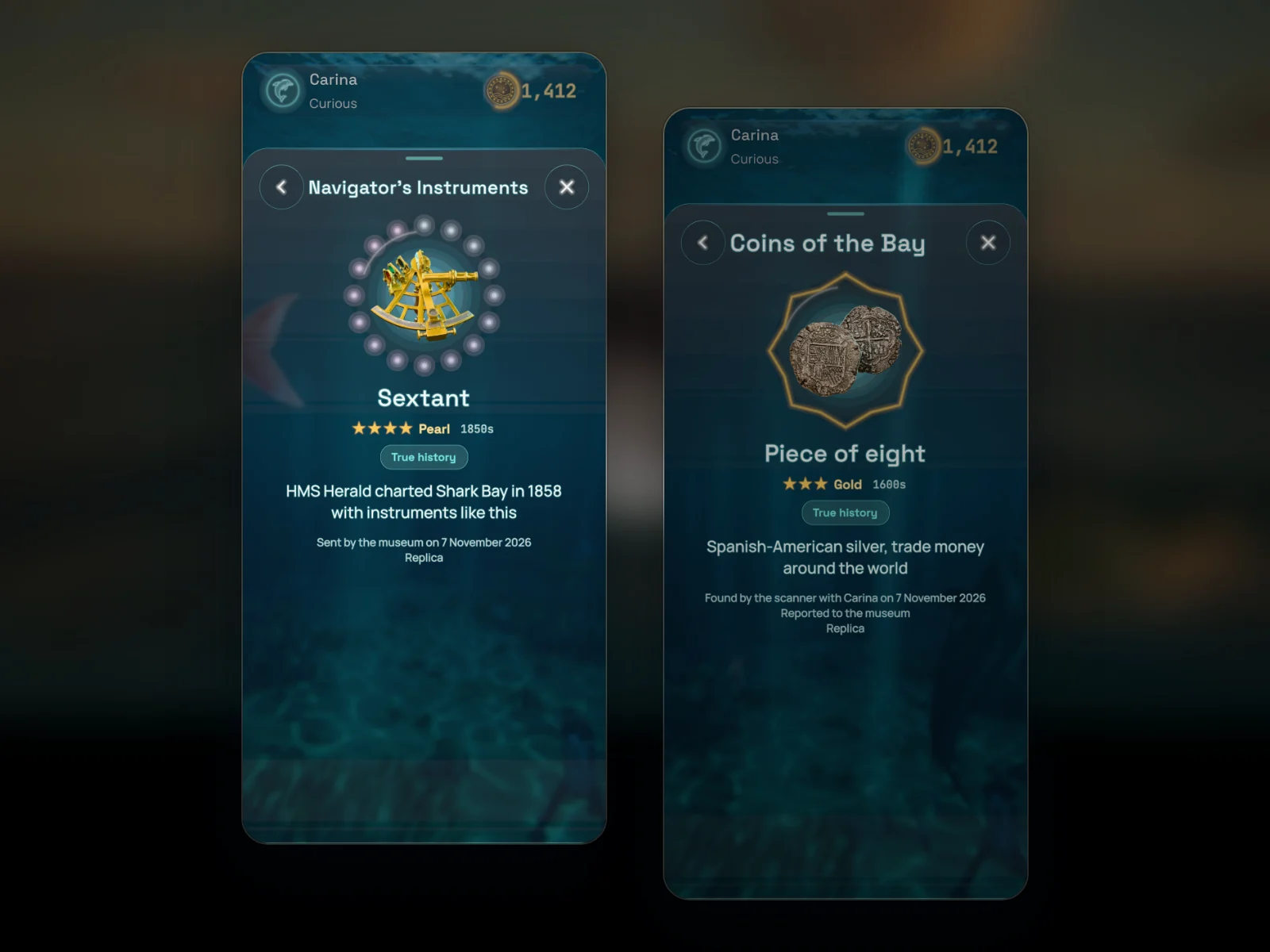
Letters and grants from the Saltlight Foundation help the station grow, one parcel at a time.
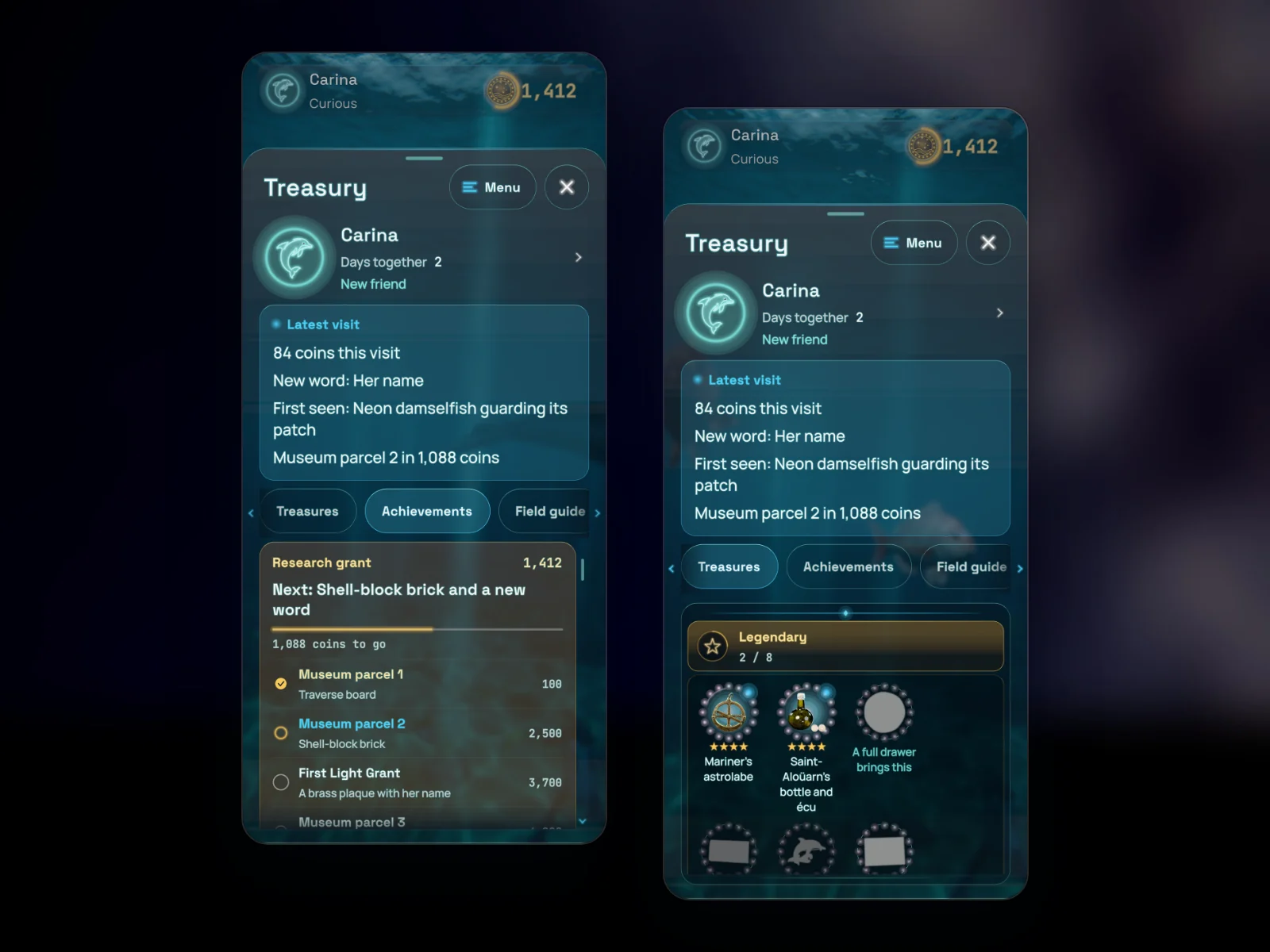
When she leaves, the sonar shows where she went. Sometimes her pod is waiting.
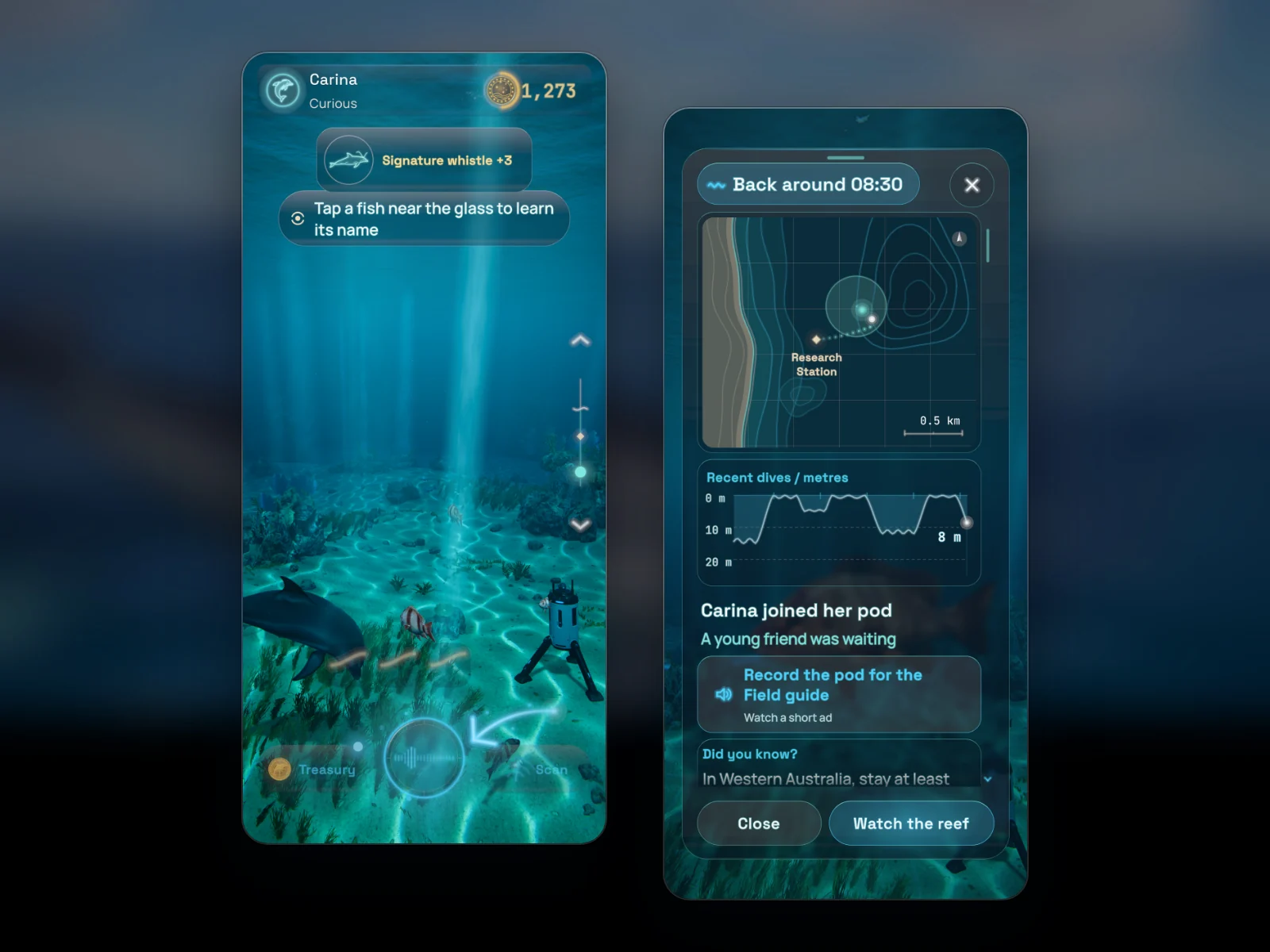
Explore all ten real gameplay screens from OceanPal: from the Whistle Composer and Shark Bay Field Guide to historical seabed replicas and passive pod sonar. Click any screen to inspect in full high resolution.
Golden evenings, starry nights, and the visitors that come with them. A green turtle drops by, probably to check on you.
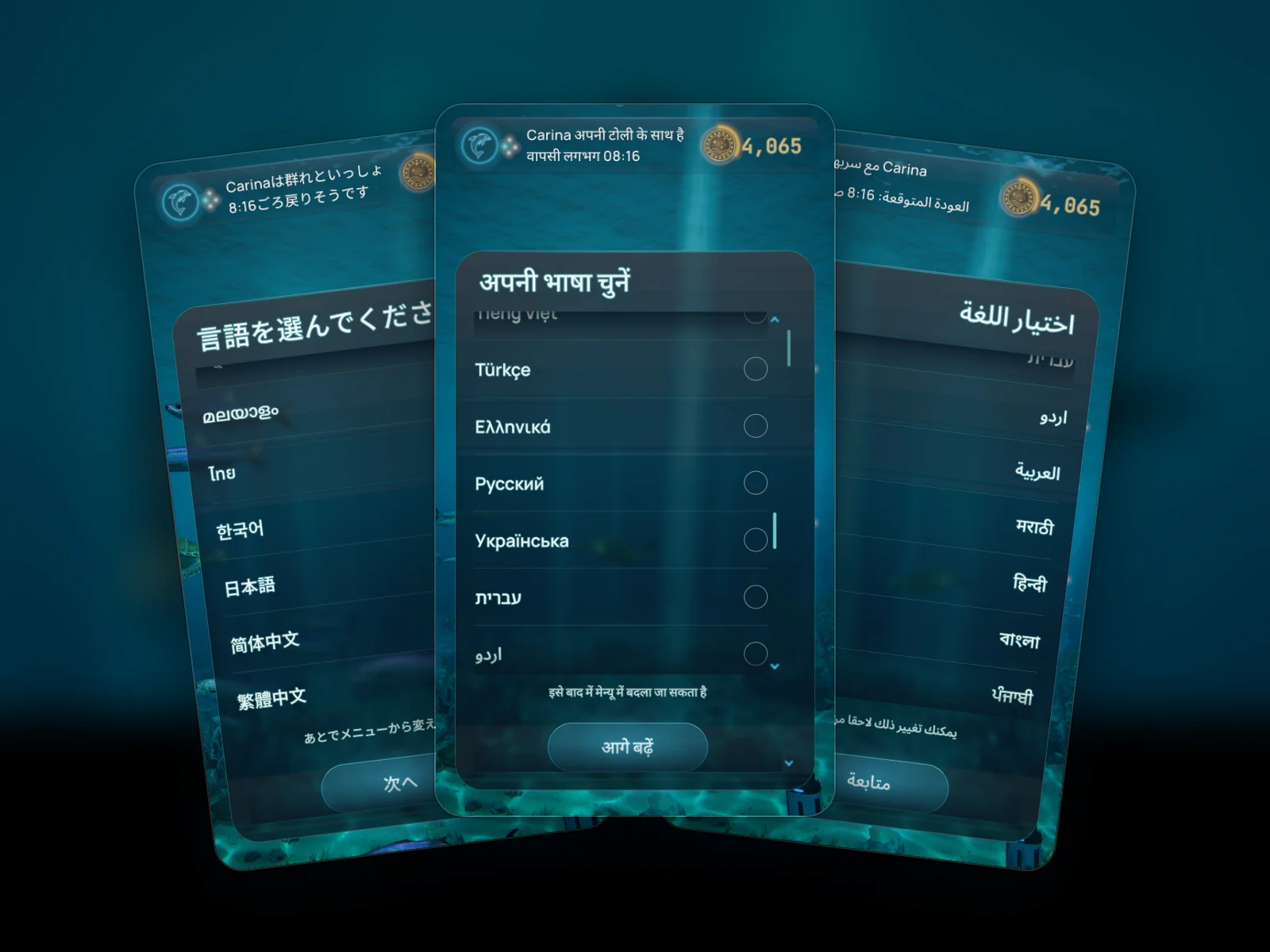
Choose yours the first time you open the game, and change it any time in the Menu. Dolphinese is a work in progress.
43 languages in 50 store locales.
Step beyond the warm seagrass flats of Shark Bay into cold green Arctic estuaries, misty northern fjords ringed by mountain forests, and sunlit Pacific giant kelp forests.
Observe wild beluga whales, matrilineal killer whale pods, and agile California sea lions in their natural coastal and pelagic habitats.
Every animal and group has its own temperament and rhythm: curious vocal beluga pods, closely bonded orca families travelling together, and playful sea lion colonies.
Master new station instruments and observation methods: distinguish voices inside a vocal pod, track family dialects across deep fjords, and log fast behaviors through dense kelp.
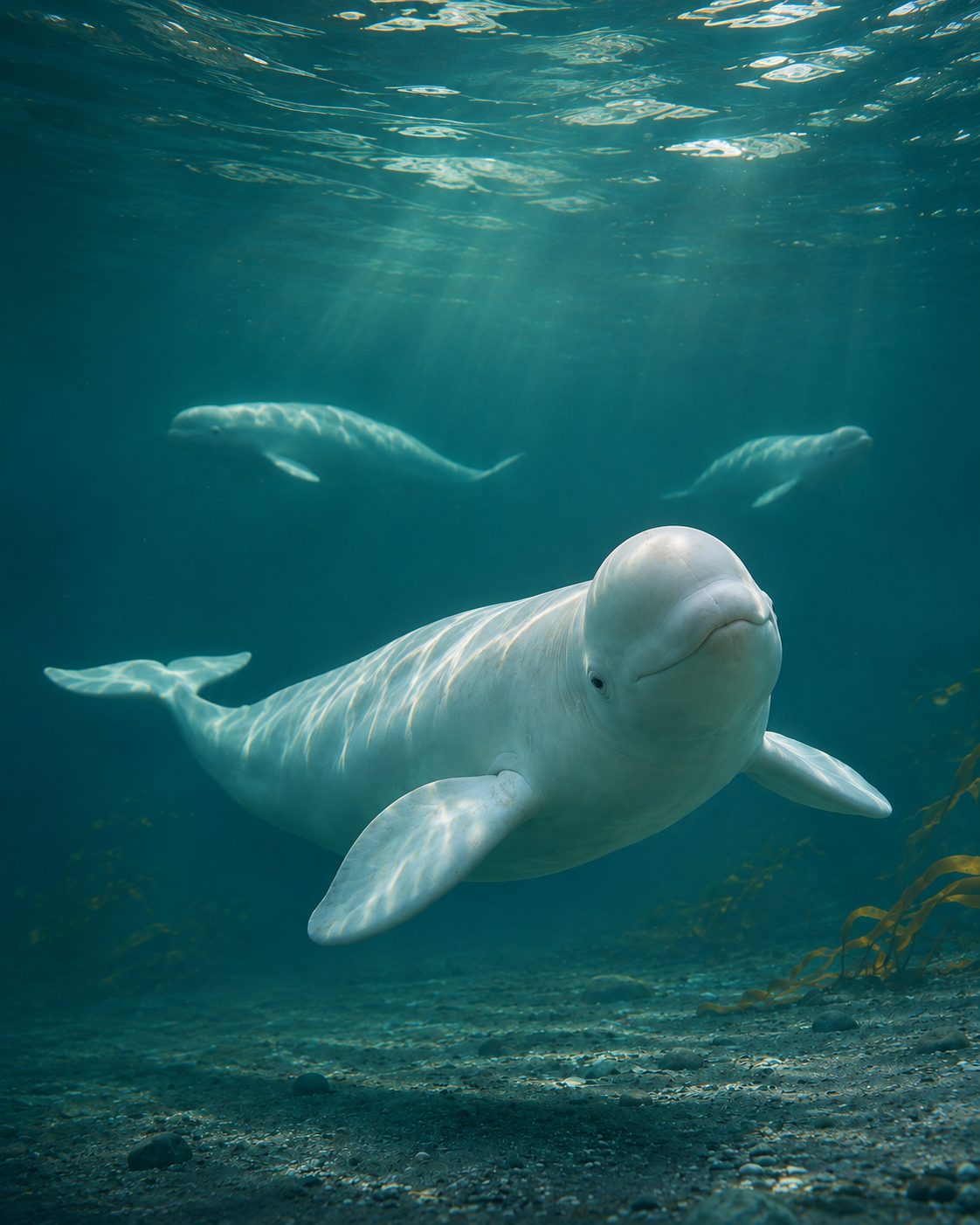
White whales, cold green water and a new station far to the north.
Cold green-blue Arctic estuary in summer, where glacier meltwater meets the sea and soft sunbeams pierce down to a kelp-lined sandy seabed.
Wild beluga whales (Delphinapterus leucas), known to mariners as the 'canaries of the sea' for their extraordinary acoustic range.
Gentle, expressive, and deeply social. Unlike a solitary visitor, belugas often approach the seabed camera in small pods, turning their rounded melons toward the lens with quiet curiosity.
Untangle a rich chorus of chirps, whistles, and clicks when several whales vocalise at once, and adapt your research schedule to cold-water visibility and seasonal estuary tides.
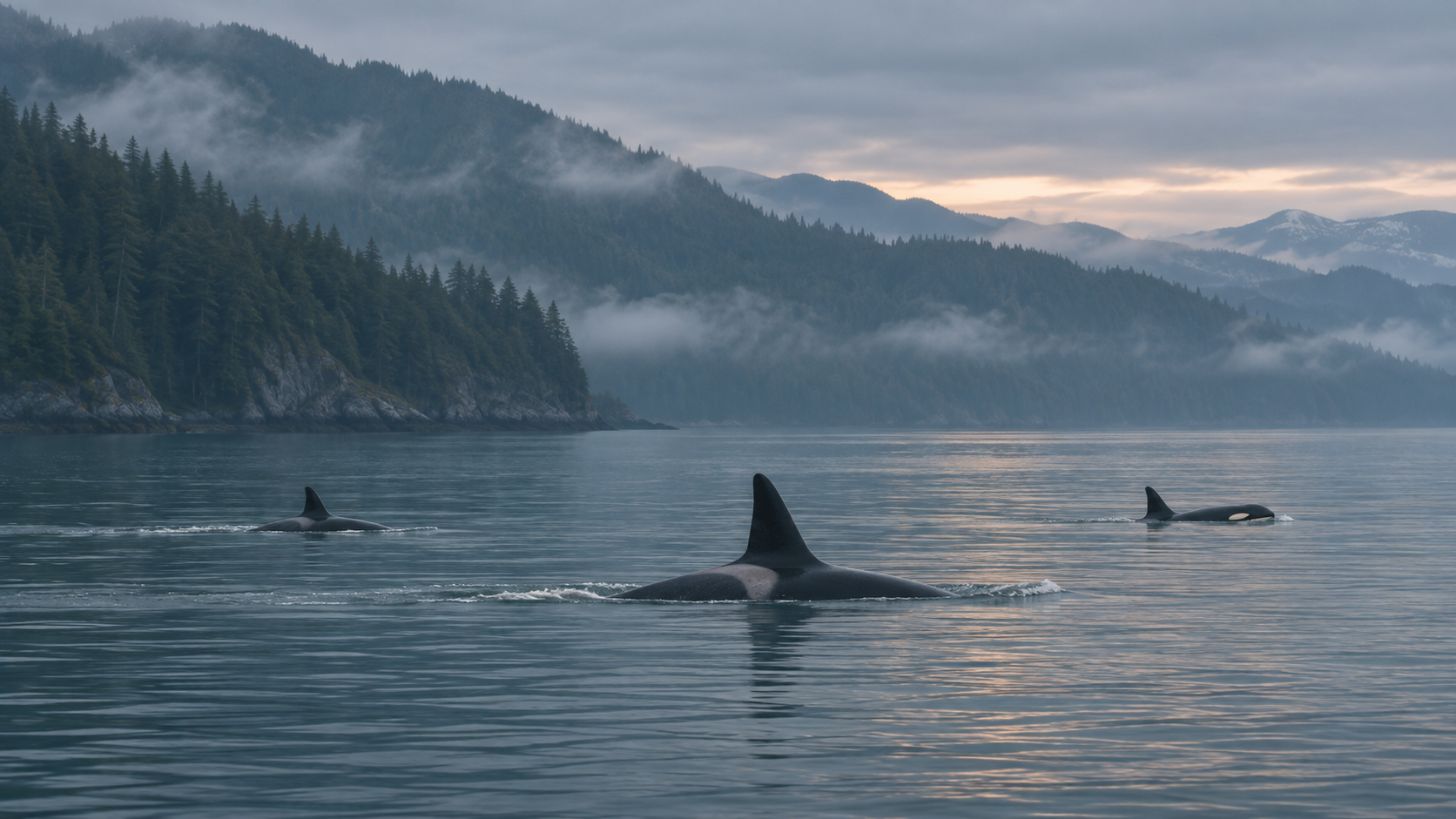
Wild orcas and the families they travel with.
A deep, glassy northern fjord at dawn, framed by dark forested mountains, drifting mist, and cold tidal channels.
Wild killer whales (Orcinus orca) travelling in enduring matrilineal family groups.
Majestic, coordinated, and family-centred. An adult male's tall dorsal fin rises alongside younger family members as they surface together and pass at their own pace.
Combine shoreline telephoto observation with deep-water hydrophone arrays to study family-specific call dialects and map long-range pod passages across the fjord.
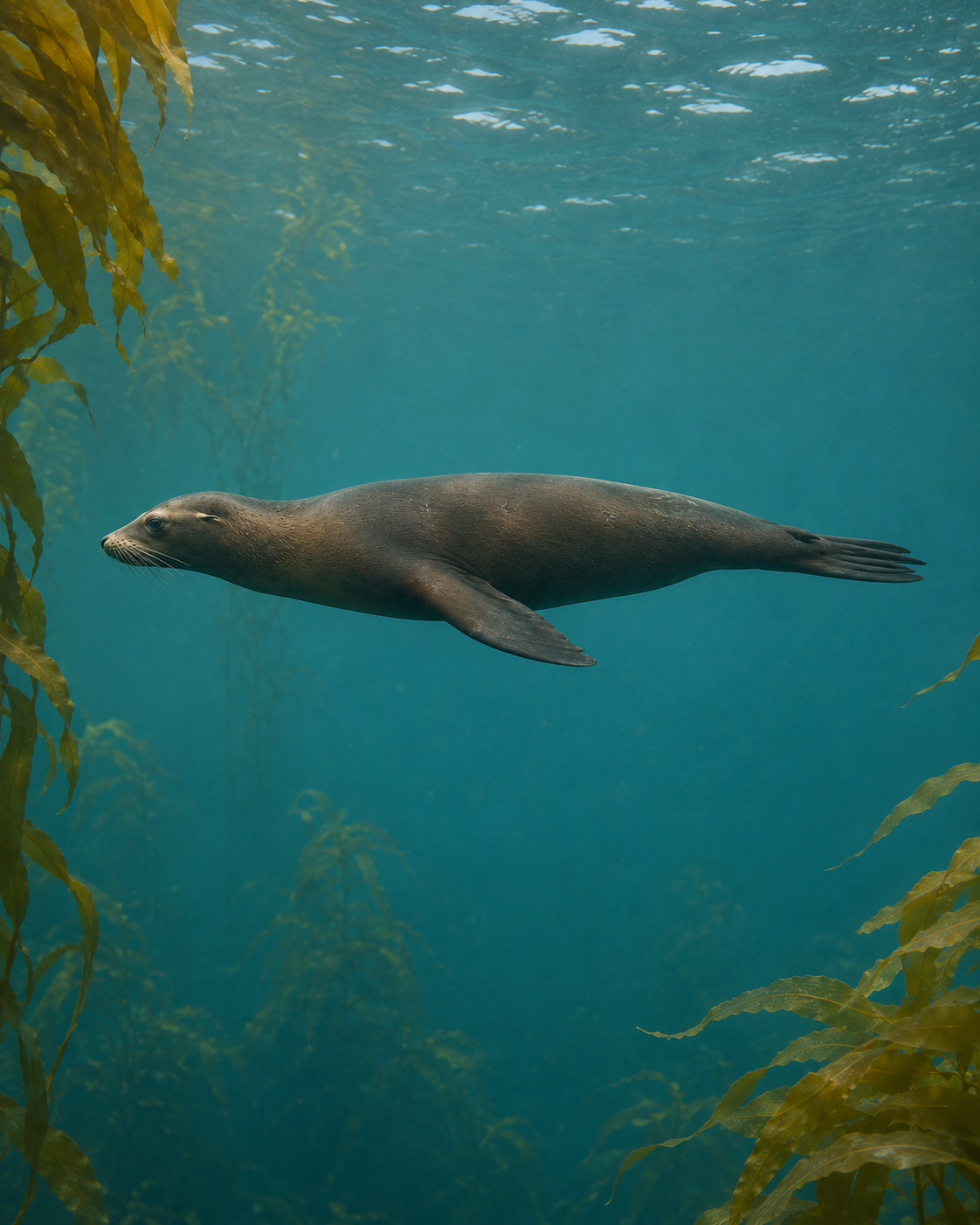
A curious colony on a Pacific shore.
Towering golden-brown Macrocystis kelp canopies swaying in clear blue-green Pacific swells beside sunlit rocky shore haul-outs.
Wild California sea lions (Zalophus californianus) sharing a vibrant coastal kelp ecosystem.
Energetic, acrobatic, and boldly inquisitive. Young sea lions twist and bank playfully between kelp fronds, pausing nose-to-lens with dark eyes and whiskers before darting back to the colony.
Keep pace with rapid three-dimensional acrobatics through shifting kelp corridors, and connect underwater foraging behaviour with social life on the sunlit rocks above.
Write to us about OceanPal, upcoming research stations (Beluga Station, Orca Station, California Sea Lion), press coverage, or player support.